
“Bruce Springsteen’s Quiet Stand: Music Over Politics in a Changing World” “The Boss Chooses Authenticity Over Expectations — But What Does This Mean for His Legacy?”
“Bruce Springsteen’s Quiet Stand: Music Over Politics in a Changing World”
“The Boss Chooses Authenticity Over Expectations — But What Does This Mean for His Legacy?”
It was a night that was supposed to be about music — the kind of night that Bruce Springsteen had spent his entire life creating. The televised music festival was drawing attention from all over the world, a moment where some of the biggest names in entertainment would come together to entertain and inspire. But as Bruce Springsteen stood backstage, preparing for his performance, he knew something was different.
There had been whispers in the dressing room about a request from the festival organizers. They had asked Springsteen to wear a pride accessory—a simple gesture to show support for the LGBTQ+ community. It was something that many artists had done in the past, a small but impactful act of solidarity.
But for Springsteen, the decision wasn’t as simple as it appeared.
When asked about the accessory during an interview just before the show, Springsteen’s response was measured, yet unwavering. “The stage is for the music and the people listening. That’s where my focus stays,” he said, his voice calm but resolute. “I’ve spent my whole career trying to make music that speaks to people, not about anything else.”
There was no anger in his voice, no bitterness. It was just a quiet commitment to his philosophy—a belief that his music, the very thing he had built his career on, should always come first. In a world where artists were increasingly expected to take political or cultural stances, Springsteen’s refusal to wear the accessory wasn’t an act of defiance; it was an act of authenticity.
As he walked onto the stage in his signature look—jeans, boots, and a worn-in jacket—there was no fanfare, no attention drawn to his appearance. He held his guitar, looking as unassuming as ever, but the media was already buzzing. The decision not to wear the accessory had sparked a firestorm, igniting debates across social media, news outlets, and among fans.
The performance itself was electric, just as expected. Springsteen’s voice, gravelly and full of soul, carried across the stadium, enveloping the crowd in his unmistakable presence. He played his hits, his deep connection with the music and the audience evident in every strum of his guitar.
But as much as the night was about the music, the buzz surrounding the accessory refusal loomed large. Fans were torn. Some praised Springsteen’s decision to stay true to himself, to focus on what mattered most — the music. To them, the request for a public show of support felt like a distraction from the deeper message Springsteen had always conveyed: unity through the power of music.
Others, however, felt disappointed, even betrayed. They believed that Springsteen, whose music had always been so deeply intertwined with the struggles of the marginalized, should have embraced the opportunity to take a stand. For some, his refusal felt like a rejection of their cause, a missed opportunity to use his platform for something greater than his music.
Backstage, the tension had been palpable. The organizers were caught off guard, unsure of how to handle the situation. The press had already begun to report on the story, and Springsteen, ever the iconoclast, had become the subject of countless debates.
Springsteen didn’t dwell on it. His focus remained on what came next: the music.
But the question remained: Was this quiet stand about something deeper?
As the days passed, the conversation continued to evolve. People were still grappling with Springsteen’s refusal. Some defended him, understanding that his artistry had always been about truth and authenticity, and that forcing him to publicly support something he didn’t feel compelled to could have undermined his entire career. For others, the issue wasn’t about the accessory—it was about what the refusal represented. It felt, to them, like an artist who was retreating from the fight, choosing neutrality over standing up for the values his music had championed for decades.
But then, just when everyone thought the storm had passed, Springsteen delivered a response that no one saw coming.
A week after the festival, in an exclusive interview with Rolling Stone, Springsteen opened up about the decision. His words, though calm, were piercing in their honesty.
“I’ve spent my whole life fighting for the people who need it most,” he said. “But what I do on that stage—what I create—isn’t about politics. It’s about connection. It’s about telling the stories of the people who feel forgotten, the people who are struggling. It’s always been that way. If I wear something because it’s expected, then I’m not being real. I’m not being true to the music, and I’m not being true to them.”
He paused, letting the words sink in. “The cause is bigger than the accessory,” he continued, “and that’s the message I’ve always tried to deliver.”
As Springsteen’s words resonated across the media, the reaction was swift and decisive. Some fans felt a renewed sense of admiration for him, understanding that his focus had always been on the power of music and storytelling. For them, this was just another example of why Bruce Springsteen had always been their champion—he wasn’t afraid to be authentically himself, regardless of the expectations placed on him.
But for others, the words felt like a misstep. They still couldn’t understand why he didn’t use his immense platform for a greater cause, to make a statement about the world that was so badly in need of change. The debate raged on, with no clear resolution in sight.
And then, just as the controversy seemed to reach its peak, something unexpected happened. Bruce Springsteen made a surprise appearance at a local LGBTQ+ charity event, not as a performer, but as a guest. He didn’t make any speeches, didn’t stand in front of cameras—he simply showed up, spent time with the people, listened to their stories, and donated a significant portion of the proceeds from his most recent album to the cause.
It was then that the true significance of Springsteen’s decision became clear. His refusal to wear the accessory at the festival wasn’t a rejection of the cause; it was a statement about the power of actions over symbols. Springsteen had always believed that the real work wasn’t in public gestures, but in the quiet, behind-the-scenes acts of kindness and support that actually made a difference.
The unexpected twist—Springsteen’s decision to act without the spotlight—reminded everyone that true change often comes in unexpected forms. It wasn’t about the accessory; it was about what he chose to do when the cameras were off. In the end, Bruce Springsteen’s message wasn’t about a political statement. It was about staying true to what mattered most: the music, the people, and the power of authenticity.
And in that, he had made a statement far stronger than any accessory ever could.
Jane Fonda and Ilhan Omar Unite for Change in Minnesota: A Moment of Power and Hope A Rally for Justice, A Twist That Changed Everything 009
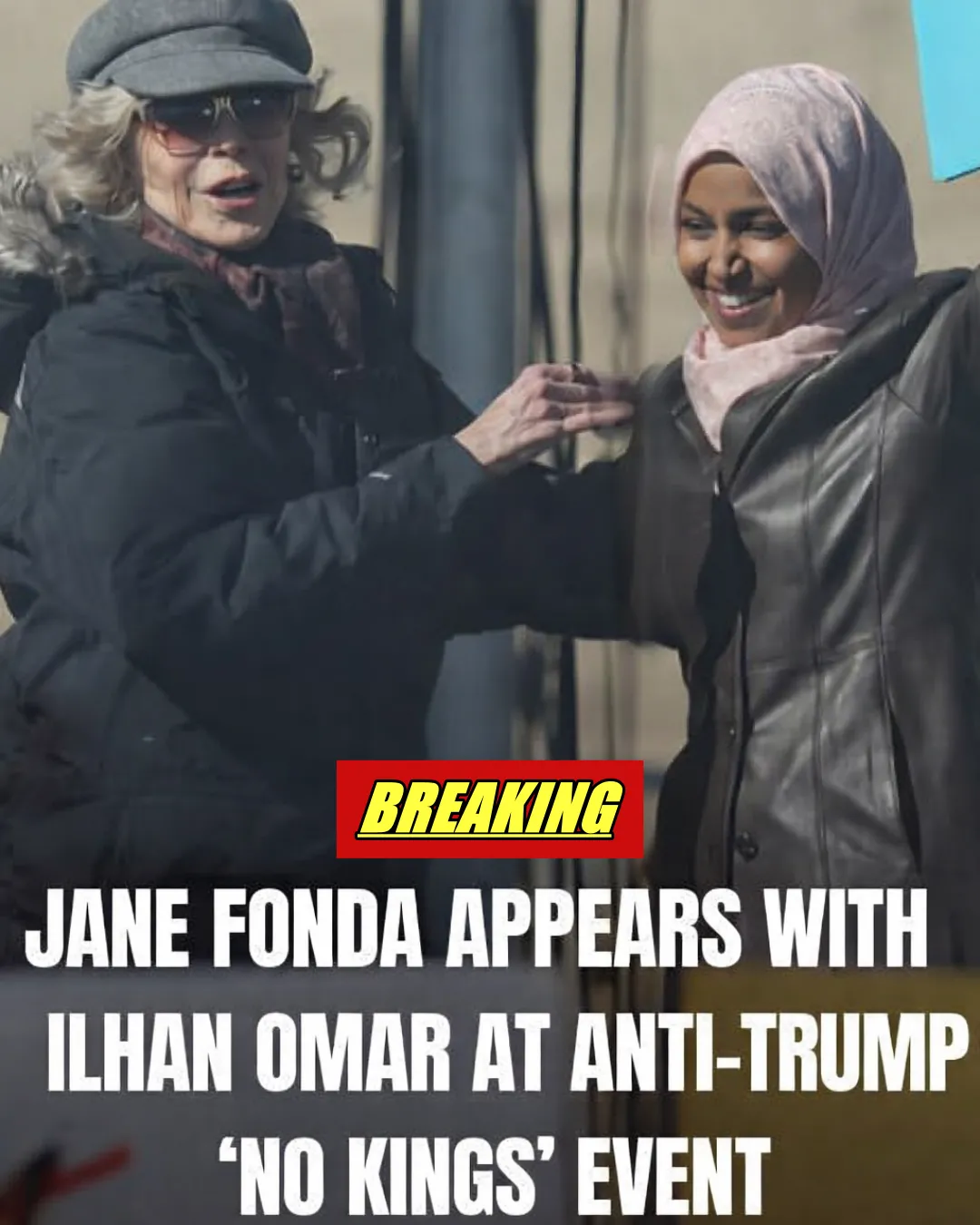
Jane Fonda and Ilhan Omar Unite for Change in Minnesota: A Moment of Power and Hope
A Rally for Justice, A Twist That Changed Everything
The crowd at the “No Kings” rally in St. Paul, Minnesota, had never seen anything like this. Nearly 100,000 people had gathered in the heart of the city to demand justice, equality, and a world free from corruption. The air was thick with anticipation, and the energy was palpable. They were here for change—but what they didn’t expect was the historic moment that would unfold before their eyes.


