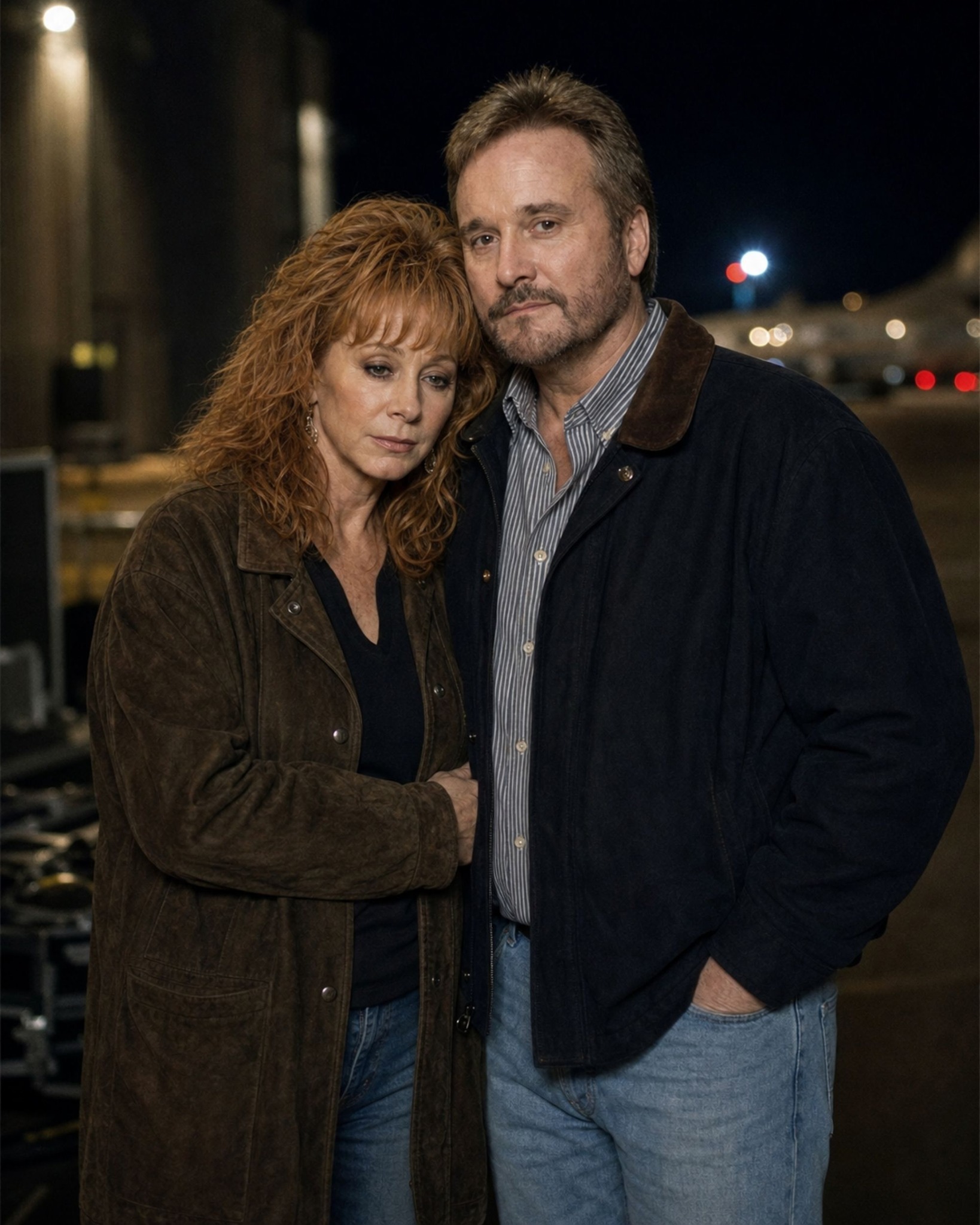
Reba McEntire was supposed to keep moving after that night, the way artists always do when the road becomes routine. One show ends, the gear is packed, the band moves on, and another city waits with another stage, another spotlight, another crowd ready to hear the songs.

But on March 16, 1991, in San Diego, the music stopped before morning.
Reba had just finished a private performance for IBM, and the evening should have closed like any other night in a busy touring life. There were schedules to follow, flights to catch, and another destination ahead. Two planes had been arranged to carry members of her band and crew onward, while Reba, her husband Narvel Blackstock, and her stylist were set to leave the next day.
That one difference would become unbearable in hindsight.
Reba did not get on the plane that night.
The first aircraft lifted off from Brown Field, but it never made it far. Not long after takeoff, the plane crashed into Otay Mountain, turning an ordinary travel plan into one of the darkest moments in country music history. Eight members of Reba’s band and crew were killed, along with the pilot and co-pilot.
The names were not just names on a road schedule.
They were part of the sound behind her.

Chris Austin, Kirk Cappello, Joey Cigainero, Paula Kaye Evans, Jim Hammon, Terry Jackson, Anthony Saputo, and Michael Thomas were suddenly gone from the stage where they had helped bring her music to life. They were the musicians and crew members standing behind the voice fans knew so well, the people who helped turn concerts into memories night after night.
For Reba, the loss was devastating in a way the public could only partly understand. Fans saw a country star grieving. Reba felt something far more personal. She had lost friends, collaborators, and people who had shared the exhausting, intimate rhythm of the road with her.
Touring creates a kind of family few outsiders fully see. Band members and crew travel together, eat together, wait together, joke through exhaustion, and stand side by side through the pressure of performance. They become part of one another’s daily lives in strange cities and late-night airports, often closer than the audience ever realizes.
That is what made the tragedy so cruel.
It did not only take lives.
It took a whole piece of Reba’s world.

In the days and weeks that followed, grief surrounded everything. There were no easy words that could make sense of why some people stayed behind and others boarded the plane. There was no simple way to return to music when the very people who helped create it were gone. The stage, once familiar, now carried empty spaces that could not be filled by applause.
Reba would later dedicate For My Broken Heart to those she lost. The album became one of the biggest of her career, but its success carried a painful shadow. To listeners, the songs held sorrow, beauty, and emotional strength. To Reba, they were tied to names, faces, and memories that no chart position could ever measure.
That is the strange cruelty of country music. Sometimes the songs people hold closest are born from rooms no one wanted to survive. A lyric can sound universal to the world, while carrying a private wound for the artist who sings it. Fans heard heartbreak polished into records. Reba heard the silence where her band used to stand.
The tragedy also changed the way many fans understood her. Reba had already been known for strength, talent, and emotional storytelling, but after San Diego, that strength took on a different meaning. She was not simply performing heartbreak. She had lived through a loss that would have broken many people, and somehow she kept going.
But continuing did not mean forgetting.
The memory of those eight lives remained part of her story, woven into her music and into the way fans looked back on that chapter of country history. Their names still matter because they were not background figures in someone else’s fame. They were artists, workers, friends, and essential parts of the sound that audiences came to love.
More than three decades later, the story still carries emotional weight because it reminds people how fragile life on the road can be. Behind every concert are people most fans never see, the musicians, pilots, crew members, technicians, and staff who make the night possible. They are part of the music, even if their names are not always printed in lights.
For Reba McEntire, March 16, 1991, was not just a date connected to tragedy. It was the night the road changed forever. It was the night a routine flight became a permanent wound. It was the night eight voices behind her voice never came home.
And when fans listen to For My Broken Heart, they are hearing more than an album.
They are hearing grief, survival, and a tribute to the people whose absence became part of the music forever.