“ANTI‑TRUMP, NOT ANTI‑AMERICA”: BRUCE SPRINGSTEEN DEFENDS HIS VOICE AS HE EMBRACES A MORE POLITICAL TOUR
Bruce Springsteen has never been an artist to shy away from the weight of his own convictions. For decades, he has been the voice of working‑class America, narrating stories of struggle, hope, loss, love, and resilience. But in recent years, as the political climate in the United States has grown more fractured and more polarized, Springsteen’s voice has grown more explicitly political. In embracing a bold new direction for his latest tour, he is making it clear: he is anti‑Trump — but he is emphatically not anti‑America.
This distinction, Springsteen insists, matters deeply to him. In interviews and public statements, he has been careful to explain that his criticism of Donald Trump and Trump’s politics does not stem from a rejection of the country he loves. On the contrary, it comes from a place of deep patriotism. For Springsteen, loving America means holding America accountable — demanding that it live up to its highest ideals.
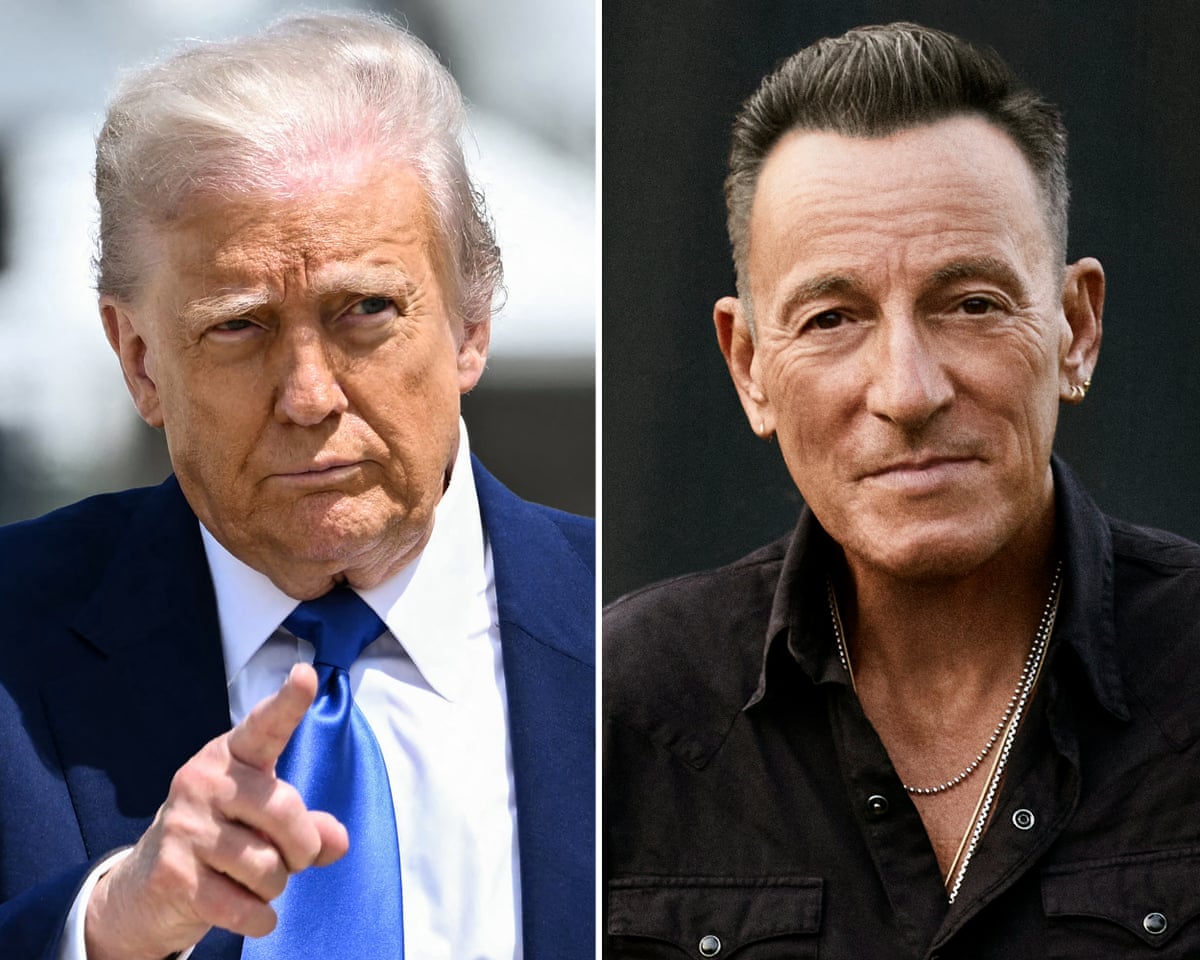
The heart of Springsteen’s message is simple, but potent: criticism is not betrayal. To some, vocal opposition to Trump has been interpreted as unpatriotic or divisive. Springsteen pushes back against that notion. “I don’t worry about losing fans over slamming Trump,” he’s said. “I love this country too much to stay silent.” Whether or not you agree with his political perspective, it’s clear that he sees his role not just as an entertainer, but as a commentator and participant in the national conversation.
A Tour That Reflects the Times
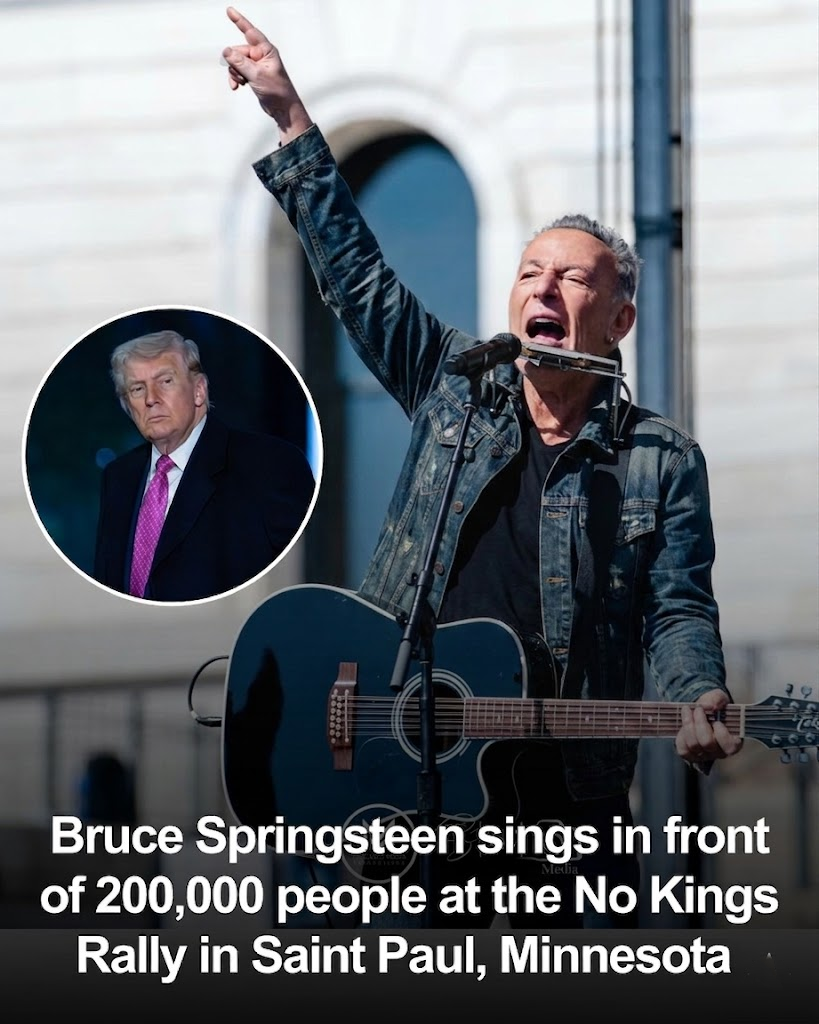
Springsteen’s new tour — which he has described as “political and very topical” — marks a departure from what some might consider the traditional “rock ’n’ roll escapism” associated with concert tours. Instead of simply delivering well‑worn hits or sticking to nostalgic callbacks, this tour is intentionally rooted in the current moment. It reflects the social, cultural, and political upheavals that define this particular era of American life.
Fans attending his concerts can expect more than just music. They will be part of a performance that brings larger themes into the spotlight: questions about democracy, concerns about inequality, debates over national identity, and the ongoing tension between unity and division in American society. Springsteen has always understood that music can do more than entertain — it can provoke thought, raise consciousness, and inspire communal reflection.
For many of his long‑time supporters, this evolution feels natural. Springsteen’s catalog has long included songs that grapple with economic hardship, class tension, and the emotional toll of modern life. Tracks like “Born in the U.S.A.” — often misunderstood as a purely patriotic anthem — actually offer a stark critique of the treatment of veterans and the promises of the American Dream. In this light, his turn toward more explicit political commentary feels more like an extension of his artistic identity than a sudden shift.
The Stakes Are High
Springsteen has made clear that he believes the stakes of this moment in American history are high. In his view, the challenges the country faces — from political polarization to threats against democratic norms — are not abstract issues to be discussed in isolation. They are real, urgent, and deserving of attention from public figures with influence.
By speaking openly about Trump and the broader political landscape, Springsteen is positioning himself as not just a singer, but a cultural participant. He acknowledges that this kind of involvement carries risk. Artists who wade into political discourse can lose support, face backlash, or become targets of public criticism. But Springsteen has embraced that risk, believing that the cost of silence would be far greater.
In making his stance public, Springsteen is also creating space for his audience to engage with his perspective — or to challenge it. He is not demanding agreement so much as inviting reflection. For him, the role of an artist is not to dictate how people should think, but to contribute meaningfully to the conversation.
What It Means to Be “Anti‑Trump, Not Anti‑America”
At the core of Springsteen’s message is an important distinction: opposing a political figure does not equate to opposing the nation itself. This is a nuance that is often lost in the heated rhetoric of contemporary discourse, where labels are thrown around with little room for complexity.
By asserting that he is “anti‑Trump,” Springsteen is expressing a clear disagreement with the values, actions, and policies associated with Donald Trump. But by adding that he is not “anti‑America,” he is acknowledging his long‑standing emotional and cultural connection to the United States. He loves the land, the people, and the democratic principles that the nation is supposed to uphold, even if he believes those principles are currently under threat.
In his view, criticizing a leader is a form of engagement — not rejection. He questions and challenges because he believes in improvement, in growth, and in the potential for a better future. It’s the difference between tearing something down and striving to build it back up stronger and more just.
This position resonates with many Americans who feel similarly torn between frustration with leadership and deep affection for their country. Springsteen’s articulation gives voice to a complex emotional reality: that one can be disappointed, even angry, and still deeply committed to the ideals upon which the nation was founded.
The Fan Reaction
Reactions to Springsteen’s political tone have been mixed — as one might expect. Some fans embrace it wholeheartedly, feeling validated by his willingness to speak his truth. For them, Springsteen’s willingness to address current issues on stage is inspiring, necessary, and meaningful.
Others are less enthusiastic. Some concertgoers prefer that shows provide escape rather than engagement. There are those who disagree politically with Springsteen’s viewpoints and feel alienated by the explicitly critical direction of the tour. But even among these responses, there is nuance. Many still express admiration for his courage and commitment, even if they don’t share his perspective.
What is undeniable is that Springsteen has sparked conversation — not just about politics, but about the role of art in society. Should artists remain neutral? Should they use their platform to influence public thought? Is it fair to expect entertainers to avoid controversial topics? Springsteen’s tour has revived these questions in bold, unavoidable ways.
Why This Matters

Whatever one’s political orientation, Springsteen’s stance matters because it highlights the power of cultural influence. Music and art have always played a role in shaping public sentiment — from folk protest songs of the 1960s to hip‑hop’s commentary on social injustice. Springsteen’s choice to infuse his tour with political resonance is an example of how art and advocacy can intersect.

Moreover, his message underscores a key democratic principle: that engagement — including disagreement — is a sign of investment, not disdain. When citizens, artists, or leaders voice concern about the direction of their country, they are participating in the ongoing project that is democracy. Springsteen, in embracing his voice, is not rejecting America — he is, in his own way, loving it fiercely.
Whether this approach gains more fans, divides opinion further, or becomes a defining moment in his legacy remains to be seen. But one thing is certain: Bruce Springsteen’s tour is not just a series of concerts. It is a cultural moment — a reflection of a divided era, an invitation to dialogue, and an embodiment of the belief that art still matters in shaping the story of a nation.