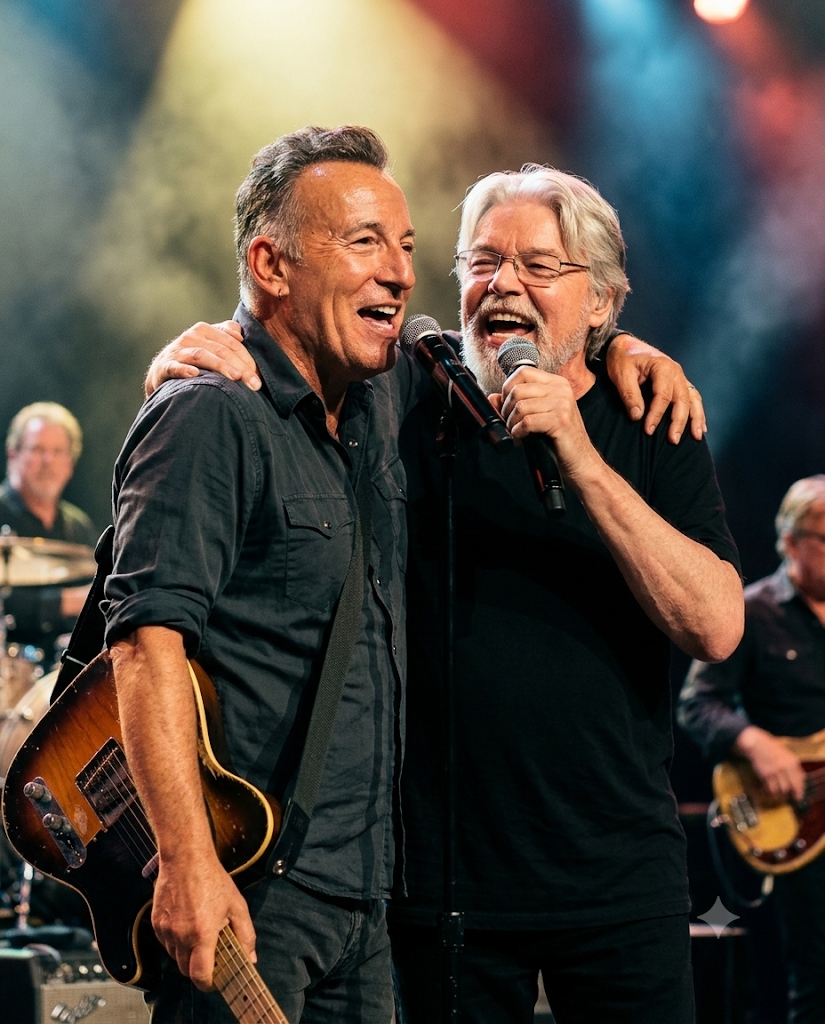
On December 1, 2011, nearly 20,000 fans filled New York City’s legendary Madison Square Garden expecting an unforgettable evening with Bob Seger and the Silver Bullet Band. But as the concert reached its most electrifying moments, something extraordinary happened. Bruce Springsteen suddenly walked onto the stage, guitar in hand, joining Seger for a thunderous performance of “Old Time Rock and Roll.” The crowd erupted as two of America’s greatest rock legends stood side by side, sharing the kind of musical chemistry that cannot be manufactured. Yet what made the moment truly special wasn’t simply the surprise appearance. Behind those roaring guitars was a remarkable story of friendship, generosity, and a favor that had remained unforgettable for 31 years.
To understand the emotional significance of that night, the story must travel back to October 3, 1980, when Springsteen launched his The River tour at Crisler Arena in Ann Arbor, Michigan. At the time, both musicians were experiencing extraordinary chapters in their careers. Springsteen was establishing himself as the voice of restless American dreams, while Seger had already become a beloved figure whose songs captured the struggles, hopes, and everyday experiences of working-class people. Although their musical journeys were different, they shared a deep respect for authentic storytelling and the kind of rock and roll that spoke directly to the heart.
That evening, Springsteen invited Seger to join him and the E Street Band during the encore. What followed became one of those spontaneous moments that musicians remember long after the final applause. According to Seger’s later recollection, Springsteen asked his guest what song he would like to perform. Seger requested “Thunder Road,” the beloved anthem from Springsteen’s landmark album Born to Run. There was just one unexpected complication: Springsteen had already performed the song earlier that night. Rather than suggest another number or disappoint his friend, Springsteen immediately agreed to play it again.
“We’ll just do it again!”
Those simple words revealed something that fans have long admired about The Boss. Despite his growing fame and the demands of a major concert tour, Springsteen was willing to set aside the planned performance to give a fellow musician a special moment. For Seger, the gesture meant enough that he later recalled keeping a cassette recording of the concert. It was never about professional obligation or publicity. It was about one artist recognizing the joy another could find in sharing a favorite song.
Thirty-one years later, that same spirit of friendship returned under the bright lights of Madison Square Garden. By December 2011, Springsteen and Seger had become established giants of American music, with decades of unforgettable performances behind them. Their songs had accompanied millions of listeners through first loves, long drives, heartbreak, family celebrations, and life’s inevitable changes. Yet when Springsteen appeared beside Seger that evening, there was something wonderfully youthful about the energy they brought to the stage.
As the unmistakable opening of “Old Time Rock and Roll” filled the arena, the audience responded with overwhelming excitement. Springsteen added his guitar and voice to Seger’s powerhouse performance, while the Silver Bullet Band delivered the driving rhythm that made the song a timeless favorite. The two musicians exchanged the easy smiles and natural confidence of performers who had known each other for decades. There were no elaborate introductions or sentimental speeches about the past. Their friendship was evident in the music itself, in the shared rhythm, and in the unmistakable pleasure of standing together once again.
For longtime fans, the reunion carried a meaning that extended far beyond a surprise guest appearance. Seger and Springsteen belonged to a generation of musicians who turned ordinary American experiences into extraordinary songs. They sang about highways, hometowns, lost youth, enduring love, and dreams that refused to disappear. Seeing them together after 31 years was like watching two familiar chapters of rock history suddenly become one story.
And perhaps the most moving part was how naturally everything came full circle. In 1980, Springsteen had generously played “Thunder Road” a second time because Seger wanted to sing it. In 2011, Seger welcomed Springsteen into his own spotlight, sharing one of his signature songs with the friend who had once made an unforgettable musical gesture.
In the end, their Madison Square Garden reunion was a reminder that the greatest moments in music are not always defined by record sales, awards, or spectacular productions. Sometimes they are born from friendship, mutual respect, and the memories that survive long after the lights go down. Thirty-one years separated those two unforgettable performances, but the connection between Bruce Springsteen and Bob Seger remained beautifully unchanged. And for the thousands who witnessed that December night, one simple truth echoed louder than the guitars: great music may last a lifetime, but genuine friendship makes it timeless.