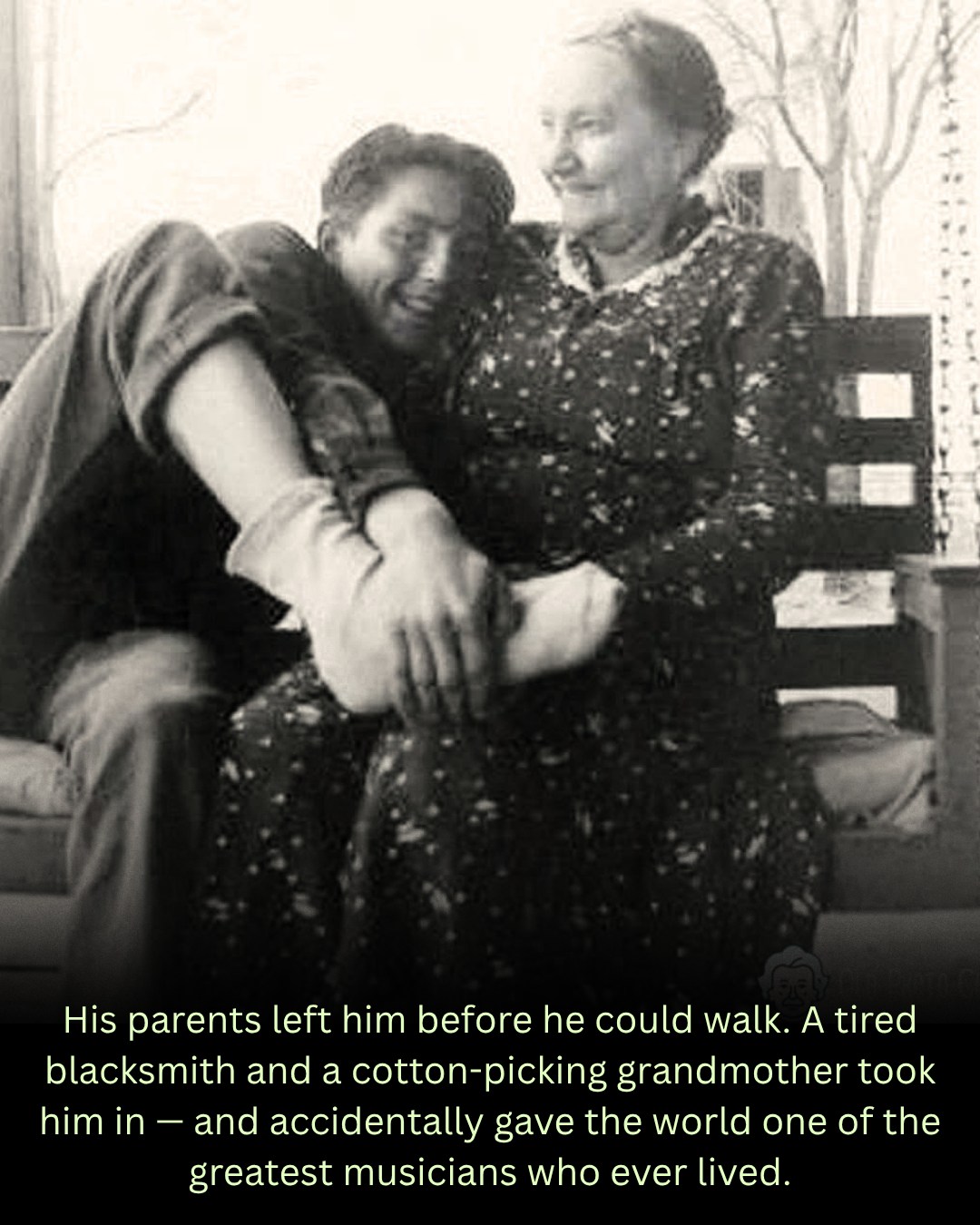
Willie Nelson Was Never Supposed to Become Willie Nelson
Willie Nelson was never meant to be a legend.
He was born on April 29, 1933, in Abbott, Texas — a tiny, dusty town stitched together by cotton fields, hard labor, and the lingering weight of the Great Depression. Life there wasn’t designed for dreams. It was built for survival.
His parents were young, restless, and unprepared for the life they had stepped into. Their marriage unraveled quickly, dissolving before Willie was old enough to remember what a family was supposed to feel like. His mother left, chasing something uncertain out west. His father followed his own path elsewhere.

And just like that, Willie and his older sister Bobbie were left behind.
They were only children — too young to understand abandonment, too small to fight against it. They had nothing.
Except two people who chose them.
Alfred and Nancy Nelson — their grandparents — stepped in quietly, without ceremony. They weren’t wealthy. They weren’t young. They weren’t looking to start over.
Alfred was a blacksmith, spending long, grueling days hammering iron beneath the relentless Texas sun. Nancy worked the cotton fields, her hands worn and weathered by years of labor that offered little reward beyond survival. They had already raised their own children. They had already done their part.
By every reasonable measure, they had earned the right to say no.
But they didn’t.
They said yes.
From that moment on, Willie and Bobbie didn’t have grandparents — they had parents. Inside a modest wooden home in Abbott, something remarkable began to take shape. Not wealth. Not comfort. But something far more enduring.
Music.
Nancy had studied music through a correspondence course from the Chicago School of Music, and she shared that knowledge with the children of the community, teaching piano with patience and care. Alfred played and sang too, filling the home with melodies that softened the edges of a hard life.
To them, music wasn’t a luxury. It was a gift — something essential, something worth passing down even when there was little else to give.
So when Willie turned six, Alfred placed a guitar into his grandson’s small hands.
It wasn’t expensive. It wasn’t perfect.
But it was everything.
At seven years old, Willie wrote his first song. By ten, he was performing in local bands. With Bobbie beside him on piano, he sang gospel hymns in small churches and at town gatherings. Even then, there was something in his voice — a quiet depth, a warmth laced with sorrow — that made people stop and listen.
It wasn’t polished. It wasn’t trained.
It was real.
But life doesn’t pause for promise.
In 1940, Alfred died of pneumonia. Willie was still just a boy. The man who had first believed in him, who had placed that guitar in his hands, was gone.
But Nancy stayed.
She stayed through the war years. Through the teenage struggles. Through the long, uncertain road to Nashville. Through rejection after rejection, when success felt like something reserved for other people.
She stayed long enough to see the world finally catch up to what she had always known.
In 1975, when Red Headed Stranger was released, it changed everything. The world began to understand the quiet genius that had been growing all along in that small Texas house.
Nancy saw it.
She lived to see her grandson become not just a musician, but a voice — one of the most beloved in American history.
She passed away in 1979, at the age of 97.
By then, she had seen it all.
And Willie never forgot.
He has never claimed that his story began in Nashville. Or on a stage. Or in a recording studio.
He knows exactly where it started.
It started with a blacksmith who believed a boy deserved a guitar.
It started with a woman whose hands were rough from picking cotton, but gentle enough to guide a child across piano keys.
It started with two people who were tired, who were poor, who had every reason to walk away — and still chose to stay.
Today, Willie Nelson is 92 years old.
He has written over a thousand songs. He has performed for presidents. He has sold tens of millions of records. His music — Crazy, On the Road Again, Blue Eyes Crying in the Rain — has become part of the American story itself.
But none of that is where his legacy truly lives.
Not in the awards. Not in the sold-out arenas.
It lives in that small house in Abbott, Texas.
It lives in the quiet moments — a guitar placed in a child’s hands, a piano lesson given after a long day in the fields, a decision made out of love instead of convenience.
That is what real legacy looks like.
It is not measured in fame.
It is measured in what you give when you have almost nothing left.
Alfred and Nancy Nelson gave everything they had — time, care, belief — to two children who had been left behind.
And because they did, the world got Willie Nelson.
Some gifts don’t reveal their value right away.
Some take decades.
And somewhere, in the echoes of every song he’s ever sung, you can still hear it — the sound of two people choosing love, again and again, in a small Texas town.
The world is still unwrapping that gift today.